In this glossary, you will find key concepts for architecture
Air-entrained concrete
Adjective
Air-entrained concrete contains billions of microscopic air cells per cubic foot. These air pockets relieve internal pressure on the concrete by providing tiny chambers for water to expand into when it freezes.
Example: Air-entrained concrete
en: Concreto con aire incluido
Architectural concrete
Adjective
Architectural concrete is concrete that will be permanently exposed to view and therefore requires special care in selection of the concrete materials, forming, placing, and finishing to obtain the desired architectural appearance.
Example: Architectural concrete
en: Hormigón arquitectónico
Asphaltic concrete
Adjective
Asphalt Concrete is a composite material commonly used in construction of roads, highways, airports, parking lots, and many other types of pavement. It is commonly called simply asphalt or blacktop.
Example: Asphaltic concrete
en: Hormigón asfáltico
Axis
Adjective
Adjective. Line connecting two points in space, about which forms can be arranged in an asymmetrical or symmetrical, balanced manner.
Example: Sidewalk
en: Eje
Backup wall
Adjective
Common interior walls (backup walls) are cold-formed steel framed walls with water-resistant sheathing and concrete masonry. Critical components in masonry veneers exposed to moisture include: Drainage cavity behind veneer wythe.
Example: Backup wall
en: Pared de respaldo
Borders
Adjective
Borders of all scales, visible and invisible, establish relationships between the built environment and surrounding communities.
Example: Rivers
en: Bordes
Brick courses
Adjective
A course is a layer of the same unit running horizontally in a wall. It can also be defined as a continuous row of any masonry unit such as bricks, concrete masonry units (CMU), stone, shingles, tiles, etc.
Example: Brick courses
en: Cursos de ladrillo
Cellular concrete
Cellular concrete is a special engineered concrete manufactured by mixing Portland cement, sand, fly ash, water and pre-formed foam in varied proportions to form a hardened material having an oven-dry density of 50 pounds per cubic foot (PCF) or less.
Example: Cellular concrete
en: Hormigón celular
Colored concrete
Adjective
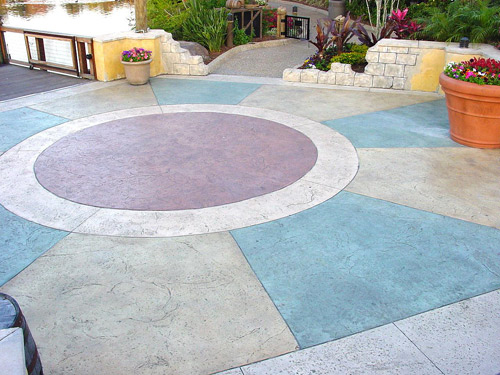
Colored concrete, also known as decorative concrete, allows traditional grey concrete to be stained and dyed different colors.
Example: Colored concrete
en: Hormigón coloreado
Concrete block
Adjective
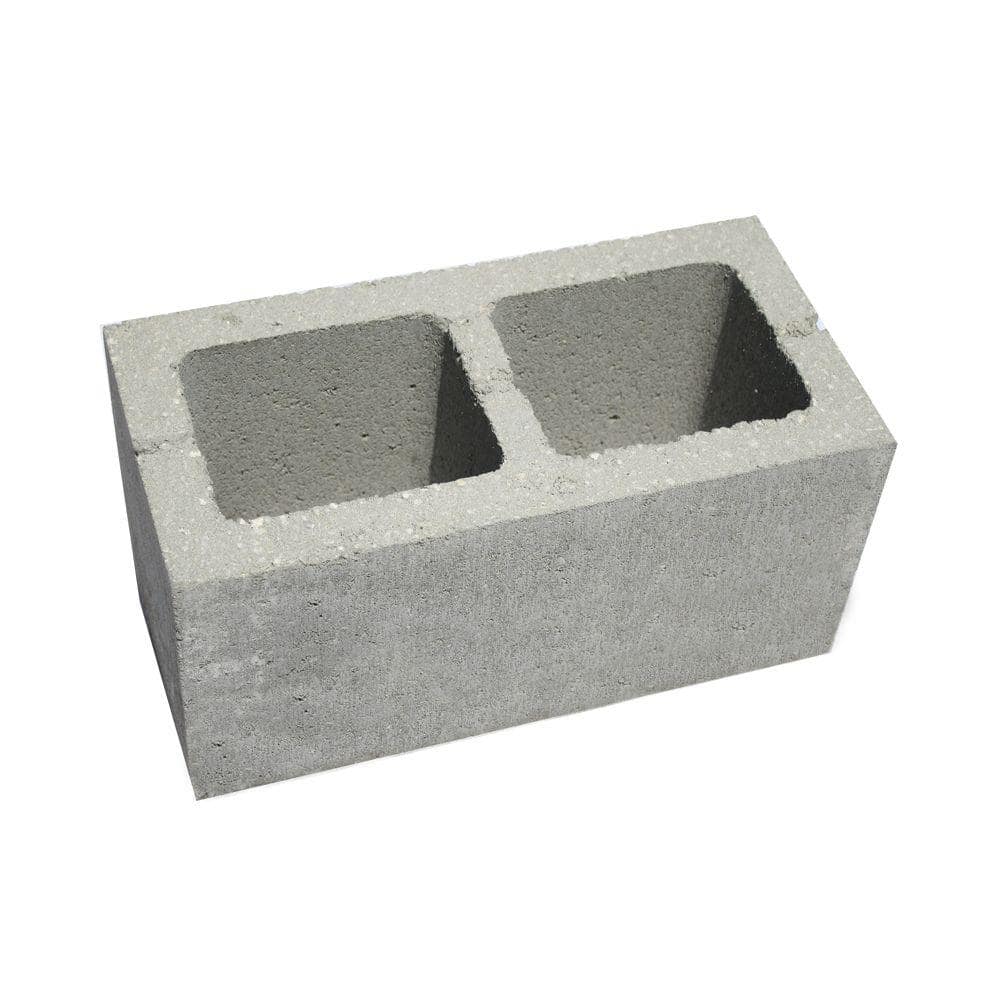
A concrete block is primarily used as a building material in the construction of walls. It is sometimes called a concrete masonry unit (CMU).
Example: Concrete block
en: Bloque de concreto
Cured concrete
Adjective
Curing of concrete is defined as providing adequate moisture, temperature, and time to allow the concrete to achieve the desired properties for its intended use.
Example: Cured concrete
en: Hormigón curado
Dovetail insert
Adjective
A joint made by inserting tenon on one piece into mortise holes in the other.
Example: Dovetail insert
en: inserto de cola de milano
Exposed concrete
Adjective
Exposed concrete refers to concrete whose surface is a visible part of the architectural and interior design of the building. Strictly speaking, this refers to concrete surfaces that were in contact with the formwork shell when they were produced.
Example: Exposed concrete
en: Hormigón visto
Gravity load
Adjective
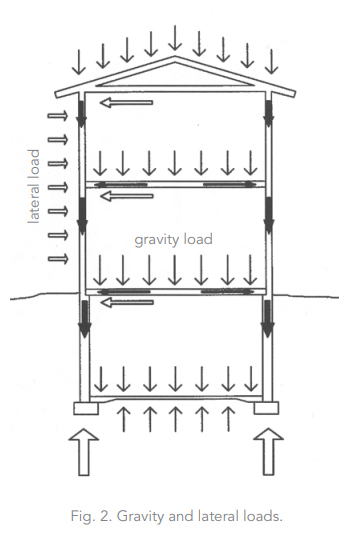
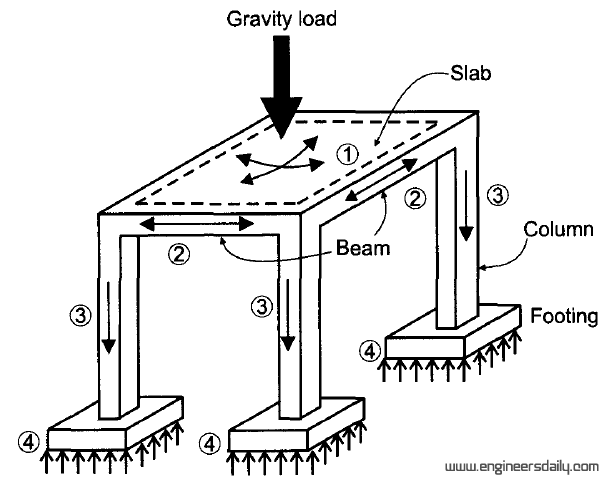
Gravity loads are the vertical forces that act on a structure. The weight of the structure, human occupancy and snow are all types of loads that needs to have a complete load path to the ground.
Example: Gravity load
en: Carga de gravedad
Green concrete
Adjective
Green concrete is defined as a concrete which uses waste material as at least one of its components, or its production process does not lead to environmental destruction, or it has high performance and life cycle sustainability.
Example: Green concrete
en: Hormigón verde
Grid
Adjective
The grid is created by establishing a regular pattern of points that define intersections. The grid is established through constant reference points and lines located in space and, although they differ in size, shape, they can share a common relationship.
Example: mosaic
en: Trama
Hanging off (of)
Adjective
To be suspended from something: The ornaments hang off the chandelier.
en: Colgando de (de)
Horizontal mortar joints
Adjective
In masonry, mortar joints are the spaces between bricks, concrete blocks, or glass blocks, that are filled with mortar or grout.
Example: Horizontal mortar joints
en: Juntas de mortero horizontales
Insulating concrete
Adjective
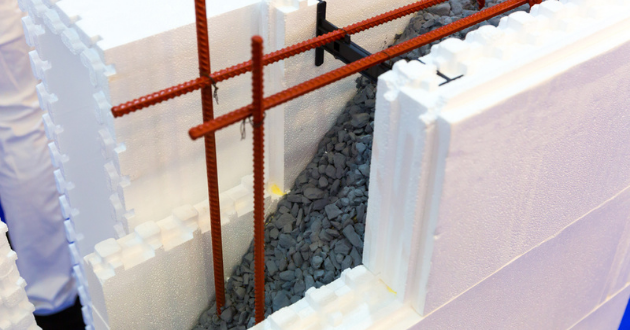
Insulating concrete forms (ICFs) result in cast-in-place concrete walls that are sandwiched between two layers of insulation material. These systems are strong and energy efficient.
Example: Insulating concrete
en: Hormigón aislante
Ladder-type systems
Adjective
Ladder system means two main air lines, generally one each side of the railway tracks, cross connected at regular intervals and able to be fed from any direction.
Example: Ladder-type systems
en: Sistemas tipo escalera
Laterally
Adjective
At, toward, or from the side or sides; sideways.
Example: Side of a building
en: Lateralmente
Masonry ties
Adjective
Wall ties, sometimes called 'brick ties', are used in buildings with cavity walls. They are used to join the two leaves of a cavity wall together, allowing the two parts to act as a homogeneous unit. Hidden from view after construction, wall ties play a vital role in ensuring the stability of a building.
Example: Wall ties
en: Lazos de albañilería
Milestones
Adjective
A stone by the side of a road showing the distance in miles to a given place
Example: Estatuas
en: Hitos
Multi-story
Adjective
Of a building: having more than two stories a multistory apartment building.
Example: Multistory apartment building
en: De varios pisos
Nodes
Adjective
Central or connecting points in a neighbourhood that have a mix of residential, commercial and institutional buildings, such as shopping areas, community centres, libraries and medium to high density housing.
en: Nodos
Path
Adjective
It is the movement of people through, around, and between buildings and other parts of the built environment. Circulation is mainly composed of three factors: time, sequence and space. The path can be designed or different spatial organizations can be identified in it, such as: linear, raster, radial, spiral, rectangular and compound.
Example: Spiral stairs
en: Trayectoria
Porous concrete
Adjective
Pervious concrete is a special type of concrete with a high porosity used for concrete flatwork applications that allows water from precipitation and other sources to pass directly through, thereby reducing the runoff from a site and allowing groundwater recharge.
Example: Porous concrete
en: Hormigón poroso
Precast concrete
Adjective
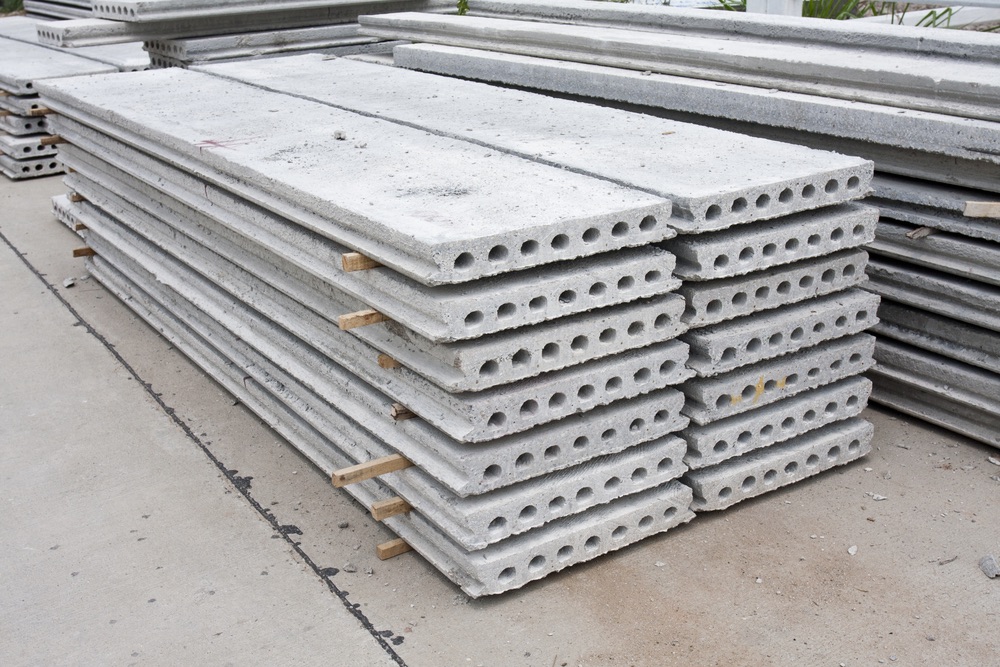
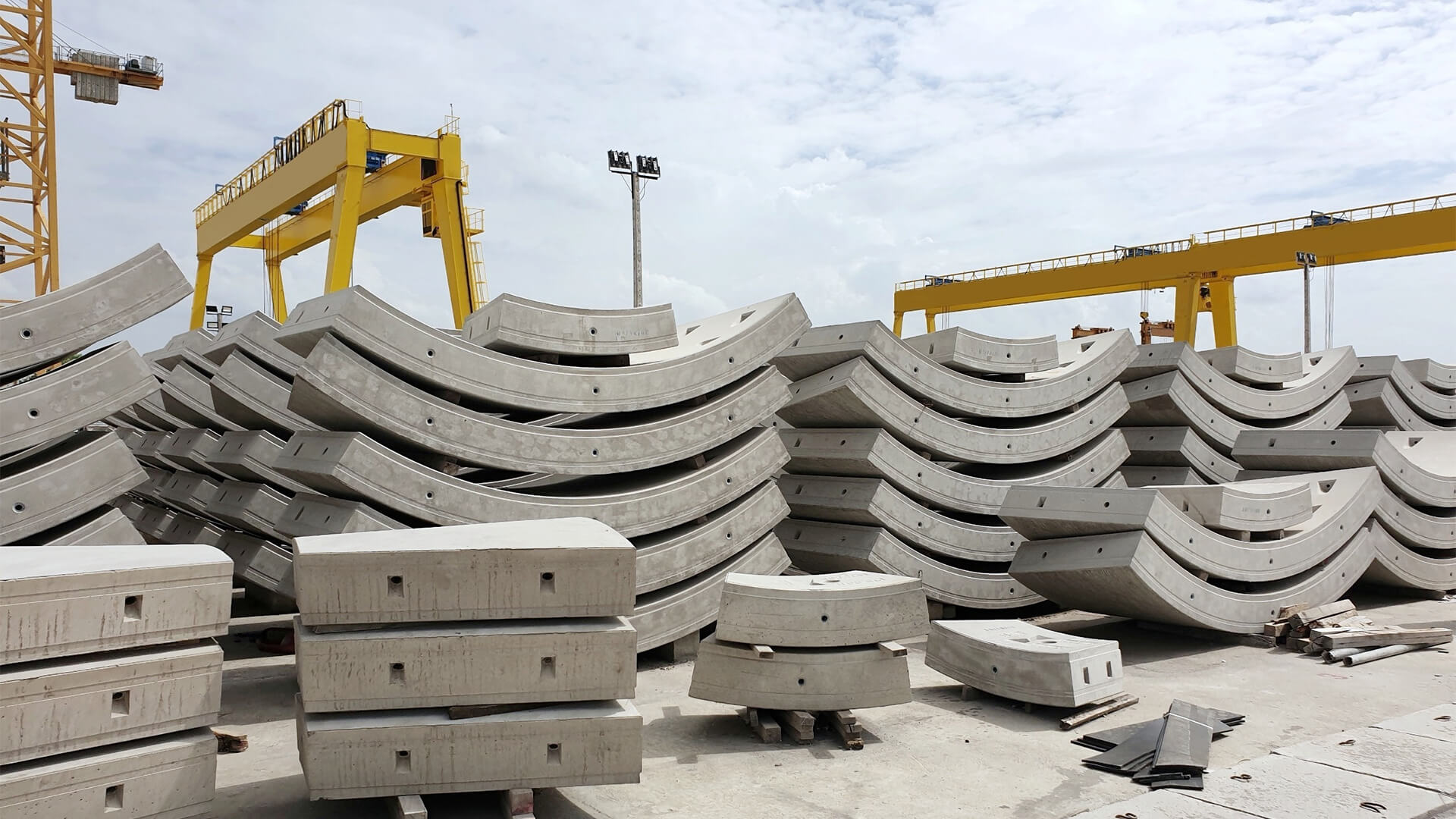
Precast concrete is simply concrete that is cast somewhere other than where it will be used. Most precast products are cast in a factory using a wet-cast method, but others are cast on site—such as tilt-up panels.
Example: Precast concrete
en: Concreto prefabricado
Prestressed concrete
Adjective
The principle behind prestressed concrete is that compressive stresses induced by high-strength steel tendons in a concrete member before loads are applied will balance the tensile stresses imposed in the member during service.
Example: Prestressed concrete
en: Hormigón pretensado
Reinforced concrete
Adjective
Reinforced concrete, concrete in which steel is embedded in such a manner that the two materials act together in resisting forces.
Example: The reinforcing steel
en: Concreto reforzado
Relief angle
Adjective
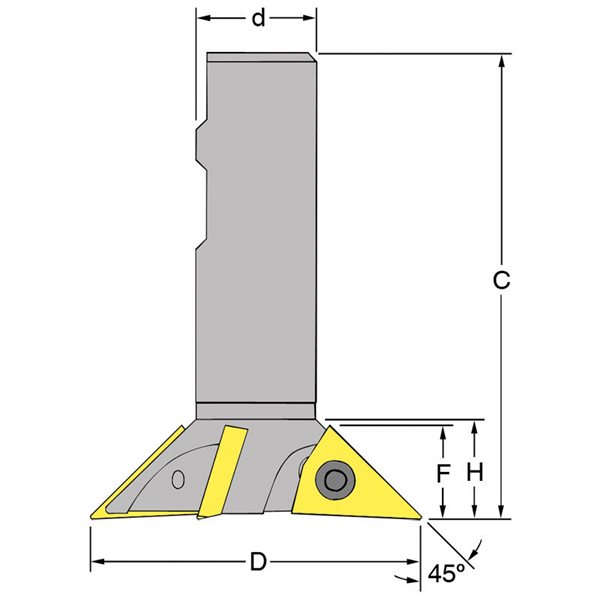
The relief angle is the angle between a cutting tool and the workpiece it has just cut.
Example: Relief angle
en: Ángulo de alivio
Supports
Adjective
Architectural supports are what hold buildings up. Inadequate architectural supports means the building will fall down.
Example: architectural supports
en: Apoyo
Tie (something) back to
Adjective
To draw and restrain something back and out of the way.
Example: curtain tieback
en: Atar (algo) a
Transfers
Adjective
The structure of a building must be responsible for transmitting the loads of the weights to the foundation and this distributes it on the ground.
Example: transfer of structural loads
en: Transferencias
Unreinforced concrete
Adjective
The construction technique of reinforced concrete, reinforced concrete or reinforced concrete consists of the combination of two materials, concrete and reinforcing steel.
Example: Unreinforced concrete
en: Hormigón no armado
Urban legibility
Adejctive
Characteristics of a space or territory that alludes to the faculty of its reading, without visual obstruction.
Example: church
en: Legibilidad urbana
Wedge anchor
Adjective
Heavy duty, stainless steel, one-piece expansion bolt that works by compressing the side sleeve against the hole made in concrete or stone.